
Pre-wedding beauty roadmap: from skin goals to skin glow
For anyone getting married in London, a clear timeline is the difference between calm preparation and last-minute stress.
Most brides start with the same question: “When should I begin treatments so my skin looks its best on the day?”
The answer is rarely a single facial or last-minute procedure. It’s a sequenced plan that considers your specific skin concerns, healing times, downtime tolerance, and the final glow you want to achieve.
Why timing matters more than chasing the newest treatment
Treatments that sound perfect in isolation can work against each other if scheduled too closely. Skin needs time to recover, regenerate, and show its true results. When the timeline is compressed, you risk unsettled skin or outcomes that don’t fully develop before the wedding.
A well-planned roadmap avoids these pitfalls by building in proper buffers and logical sequencing.
Foundation phase – 9 to 12 months before the wedding
This is the time to assess your skin's current state and begin building the structural groundwork. The focus is on concerns that need a long runway — anything where results develop gradually, carry meaningful downtime, or where adjustment time matters.
For anyone considering injectables for the first time, this is the right window. Starting toxins or fillers early allows time to assess results, make refinements if needed, and arrive at the day with a settled, familiar outcome rather than an untested one. Other treatments that sit well here include laser treatments, biostimulators, skin peels begun as a course, and energy-based tightening treatments such as HIFU.
HIFU (High-Intensity Focused Ultrasound) is one of the most searched non-surgical skin tightening treatments right now, and for good reason. It works at a structural level, stimulating collagen deep within the skin to lift and firm over time. Results typically begin to show somewhere between three and six months after treatment, which is precisely why planning well in advance matters. How many sessions are needed varies depending on the device used, as different systems such as Ultraformer III, Ultherapy and Doublo Gold work at different depths and intensities, as well as individual factors including skin laxity, age, and lifestyle. Some people see the results they want from a single session; others benefit from two or more. A thorough consultation with a medical provider or clinician will give a clearer picture, but the common thread is that this is not a last-minute treatment. The collagen response takes time, and that time needs to be built into the plan.
Refinement phase – 6 to 9 months before the wedding
With the foundation in place, this phase shifts focus to texture, tone and surface quality. The structural work is underway; the priority now is monitoring response and adjusting the plan as the skin settles.
Treatments that work well here include radiofrequency microneedling, IPL for pigmentation or redness, injectable moisturisers, skin boosters, and LED therapy to support the skin between more active treatments. Two treatments that have seen a significant rise in demand and sit particularly well in this phase are microneedling combined with exosomes, and polynucleotides.
Both are typically delivered as a course of three to four sessions spaced four to six weeks apart, with visible improvements beginning to build from around two to three weeks after the first treatment. Starting at this stage allows time to complete the course, assess the results, and consider a maintenance session closer to the date if needed, making this phase the natural window to complete them with enough time for full results to show before the day.
Finishing phase – 6 to 8 weeks before the wedding
The approach becomes more conservative from here. This window still allows for subtle refinements, but the priority is stability and skin quality rather than change.
In the 4 to 8 week period, maintenance injectables, skin boosters and targeted texture correction can still be considered, provided recovery windows do not overlap. This window is for those with an established treatment history. It is not the right time to try injectables for the first time. In the final three weeks, the focus shifts entirely to maintenance: gentle facials, lymphatic drainage, and LED red light therapy for those who have used it previously. In the last week or two, surface hydration only. Nothing new, nothing reactive, nothing untested.
Next steps, what feels right for you?
Every bride’s situation is different. Some prefer to explore the ideas on their own first, while others want personalised support right away.
Prefer to explore your own first?
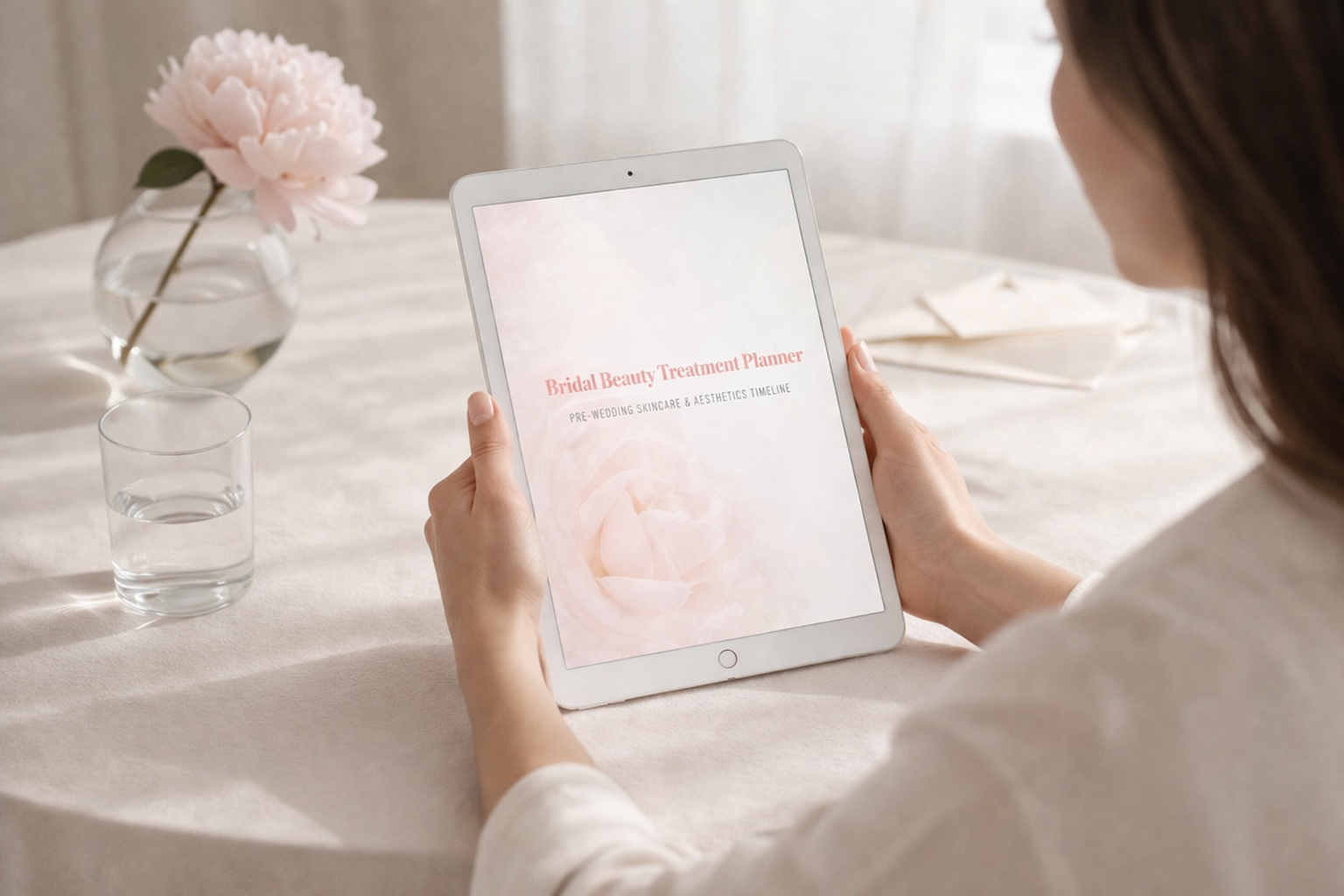
Download our free Bridal Beauty Timeline Guide for a clear, structured overview of pre-wedding skincare, aesthetics, and recovery treatments, from six months down to the final two weeks before your wedding.
Ready for a calm, personalised plan?
Let us create a tailored pre-wedding beauty timeline and shortlist around your specific skin goals, wedding date and lifestyle with reasoned sequencing, recovery guidance, and practical trade-offs.